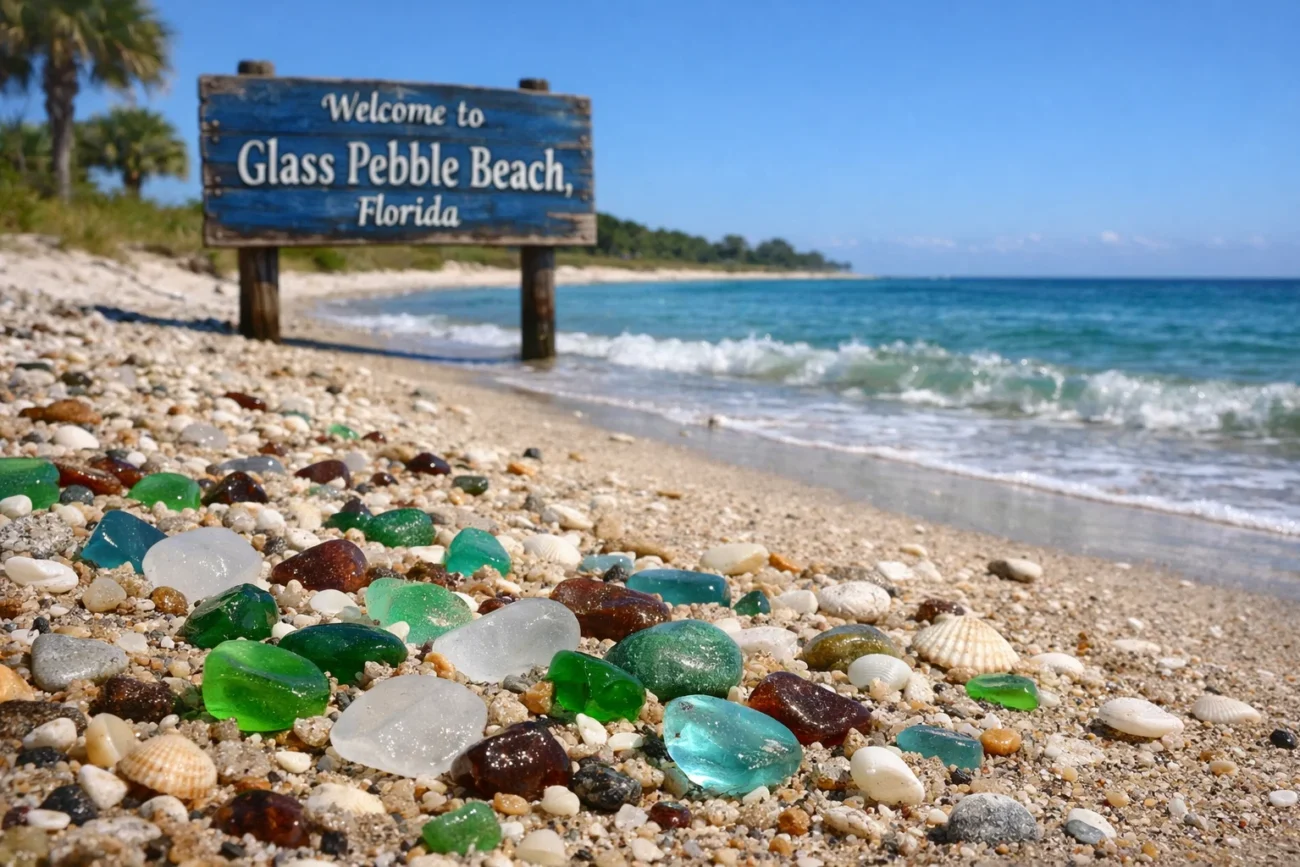
If you’re a lover of the ocean and all the hidden treasures it holds, you might be familiar with the allure of sea glass. When it comes to beaches in Florida, Glass Pebble Beach Florida can be an exciting discovery for beachcombers and treasure hunters alike. Although there isn’t a specific beach officially named “Glass Pebble Beach Florida,” there are certain coastlines where you can find the same glistening sea glass scattered along the shores. This guide will help you explore Florida’s sea glass treasures, how they form, where to find them, and the best tips to make the most of your beachcombing adventures.
What Is Sea Glass and How Does It Form?
Sea glass is not just any ordinary glass. It’s the product of time, tide, and nature’s relentless forces. Initially, sea glass starts as discarded glass items like bottles, windows, or jars that have been thrown away or lost. These pieces of glass can remain sharp and dangerous, but when they are carried by the ocean’s waves, the edges are smoothed out by constant abrasion with sand and rocks. Over the course of many years, they slowly turn into small, frosted, and smooth treasures that resemble gems.
The process of turning raw glass into sea glass isn’t quick. It takes decades, even centuries, for glass to weather to its final form. The journey begins when discarded glass is swept into the ocean, either from waste disposal, shipwrecks, or other accidents. Once in the water, the glass is constantly tumbled by waves and tides. Over time, this tumbling smoothens the edges, and the glass begins to take on a frosty appearance.
Interestingly, sea glass comes in different colors, which depend on the source of the glass and the minerals that may have been involved. Common colors include white, brown, and green—typically from bottles and jars. However, rarer colors such as red, cobalt blue, and purple can be found, often making those particular pieces more valuable to collectors. This variety adds to the excitement of sea glass hunting, as finding a rare color feels like uncovering a hidden treasure.
Glass Pebble Beach Florida: Where to Find Them
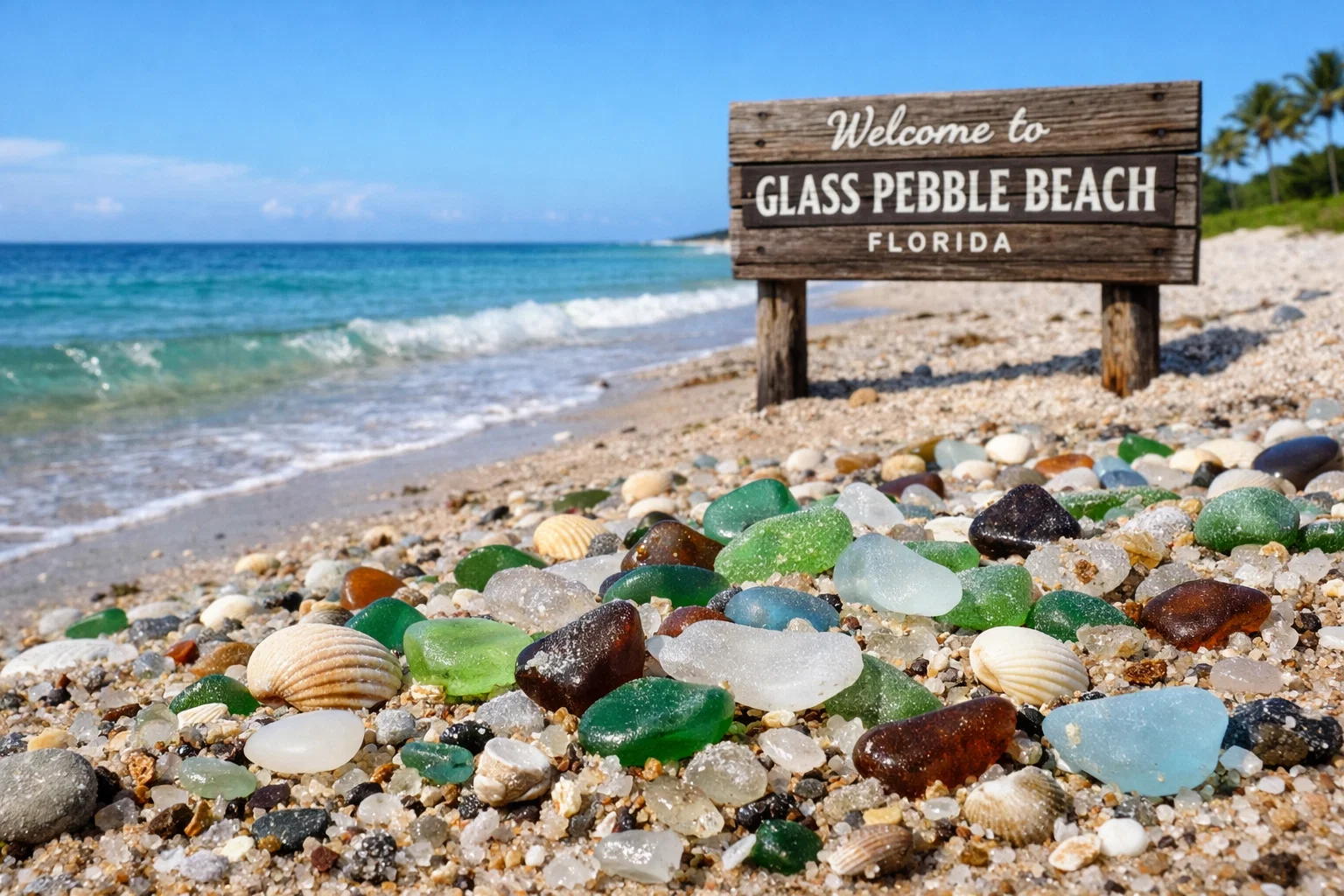
While Florida may not have an official “Glass Pebble Beach Florida,” several beaches along its extensive coastline are known for their potential sea glass discoveries. Many of these beaches are located in less-trafficked areas, making them prime locations for beachcombers who want to find something special. On the Atlantic coast and Gulf Coast, there are several spots where you can search for sea glass, each offering a different beachcombing experience.
One of the most popular places for sea glass in Florida is Sanibel Island, located off the Gulf Coast. Sanibel is famous for its abundance of seashells, but it is also a great place to find sea glass. The island’s shores are regularly swept by tides, bringing in glass pieces from far and wide. Another prime location is Captiva Island, just north of Sanibel, where the beaches offer great opportunities for collecting smooth, frosted sea glass pieces, along with shells and other treasures.
If you’re heading to the Atlantic Coast, Jupiter Island is another fantastic location for sea glass hunting. The beaches here are quieter and less commercialized, making them perfect for finding sea glass and other interesting ocean debris. Similarly, Hutchinson Island, located in Martin County, offers pristine beaches where sea glass can be found, though it requires a little more patience and searching.
The Best Time to Search for Glass Pebbles
When it comes to finding sea glass, timing plays an important role. The best times to search for Glass Pebble Beach Florida are early mornings and after storms or heavy tides. During these times, the waves tend to bring up new treasures, including sea glass, onto the shore. After a storm, you may find that the ocean has churned up more glass, shells, and other debris, making it a prime opportunity to find something truly special.
Early mornings are particularly beneficial for beachcombing because the beaches tend to be less crowded, and you can focus solely on scanning the sands for sea glass. The early light also helps the frosted appearance of the sea glass sparkle, making it easier to spot. You’ll be ahead of the crowds, giving you a better chance to claim your glass treasures before others.
During different seasons, such as fall and winter, the ocean’s currents change, which can affect the amount of sea glass washed ashore. While sea glass can be found year-round in Florida, it’s worth noting that the winter months often see more powerful waves, which may push more glass onto the shore. If you’re truly dedicated to sea glass hunting, it’s a good idea to keep a lookout after storms or even visit beaches following a full moon, which tends to bring in strong tidal waves.
How to Collect Sea Glass and Glass Pebbles
Collecting sea glass is all about patience and paying attention to detail. The key is to scan the shore carefully, looking for tiny bits of frosted glass that may be half-buried in the sand. When searching for sea glass, it’s helpful to bring along a mesh bag or container to collect your findings. You can also bring a small rake to sift through the sand and reveal hidden glass pieces that may be just below the surface.
As you walk along the beach, try not to focus solely on large, obvious pieces. Often, the smaller, more intricate bits of sea glass are the most rewarding finds. Be sure to scan both the wet and dry parts of the beach, as sea glass can be found in both areas. Additionally, keep your eyes open for pieces of glass that are partially buried in the sand, as they can be easy to miss.
When collecting sea glass, remember that some beaches may have regulations in place that prohibit taking sea glass or other natural treasures. Always check local guidelines before gathering sea glass to ensure you’re following the rules. Additionally, some experienced beachcombers recommend leaving some glass behind for others to enjoy, as part of the natural beauty of the beach is the ability to share the experience with future explorers.
The Thrill of Finding Rare Sea Glass
One of the most exciting aspects of hunting for sea glass on Glass Pebble Beach Florida is the possibility of finding rare colors and shapes. Common sea glass colors, like green and brown, can be found relatively easily. However, if you’re lucky, you may discover rare pieces like cobalt blue, red, or even orange glass. These colors are typically harder to find because they come from limited sources, such as certain types of bottles or specific products.
Collectors value rare sea glass because of its scarcity and unique history. Some pieces, particularly those from older bottles or antiques, can even hold historical value. If you find an especially rare or old piece, it’s worth researching its origins or consulting with an expert to learn more about its background. Many sea glass enthusiasts enjoy the thrill of discovering such items and even share their findings with online communities, where they can compare their collections.
The rarity of some pieces also increases the value of the glass. For instance, old glass items like glass insulators or vintage bottles that have been turned into sea glass are often highly sought after by collectors. However, for most beachcombers, the joy of finding sea glass isn’t about the price—it’s about the adventure and the connection to nature that comes with each discovery.
Caring for Your Sea Glass Collection
Once you’ve gathered a selection of sea glass from Glass Pebble Beach Florida, it’s important to take care of your collection to ensure that it remains in good condition for years to come. Sea glass is naturally smooth, but it can still be fragile, especially if the pieces are thin or very old. Storing your sea glass in a secure container is crucial to prevent it from breaking or getting scratched.
To display your collection, consider using a glass jar or a shadow box, where each piece can be carefully arranged and admired. If you want to incorporate sea glass into jewelry or art projects, be sure to clean the pieces gently with warm water and a soft cloth. Avoid using harsh chemicals or abrasives, as they can damage the frosted surface of the glass.
Additionally, many people enjoy making crafts or jewelry out of sea glass. If you’re interested in doing this, you can easily turn your collection into necklaces, earrings, or keychains. Crafting with sea glass is a fun way to preserve the memories of your beachcombing adventures and create meaningful gifts or keepsakes.
The Environmental Impact of Sea Glass Collection
While collecting sea glass can be a fun and rewarding activity, it’s essential to be mindful of the environmental impact of removing natural items from the beach. Taking large quantities of sea glass or other natural items may disrupt the local ecosystem, so it’s important to take only a small amount that won’t harm the environment. This ensures that future generations of beachcombers can continue to enjoy the beauty of the beach and the glass treasures it holds.
Some beaches have established rules regarding the collection of sea glass and other natural treasures. For example, in some national parks or protected coastal areas, collecting sea glass may be prohibited. Before heading out to hunt for glass, check local guidelines or speak with park rangers to ensure you’re following the rules. Respecting these regulations helps preserve the natural beauty of the coastline and ensures that future beachcombers can continue enjoying the experience.
In addition, it’s always a good practice to leave the beach cleaner than you found it. If you come across trash or other debris during your search for sea glass, take the time to pick it up and dispose of it properly. This helps protect wildlife and keeps the beach pristine for everyone to enjoy.
Read More: Social Media Stuff Embedtree: Revolutionizing Social Media Management
Conclusion: Enjoying Glass Pebble Beach Florida Responsibly
In conclusion, while Florida may not have a designated “Glass Pebble Beach,” there are many beaches across the state where you can enjoy the hunt for beautiful sea glass and glass pebbles. Whether you’re visiting Sanibel Island, Captiva Island, or the hidden beaches along the Atlantic and Gulf coasts, there’s no shortage of opportunities to collect these treasures of the sea.
Remember to be patient, respect the environment, and enjoy the experience of beachcombing. Sea glass hunting in Florida is not just about finding glass—it’s about connecting with nature, exploring new beaches, and discovering the hidden gems that the ocean provides. So grab a bag, head to the beach, and start your adventure today!
