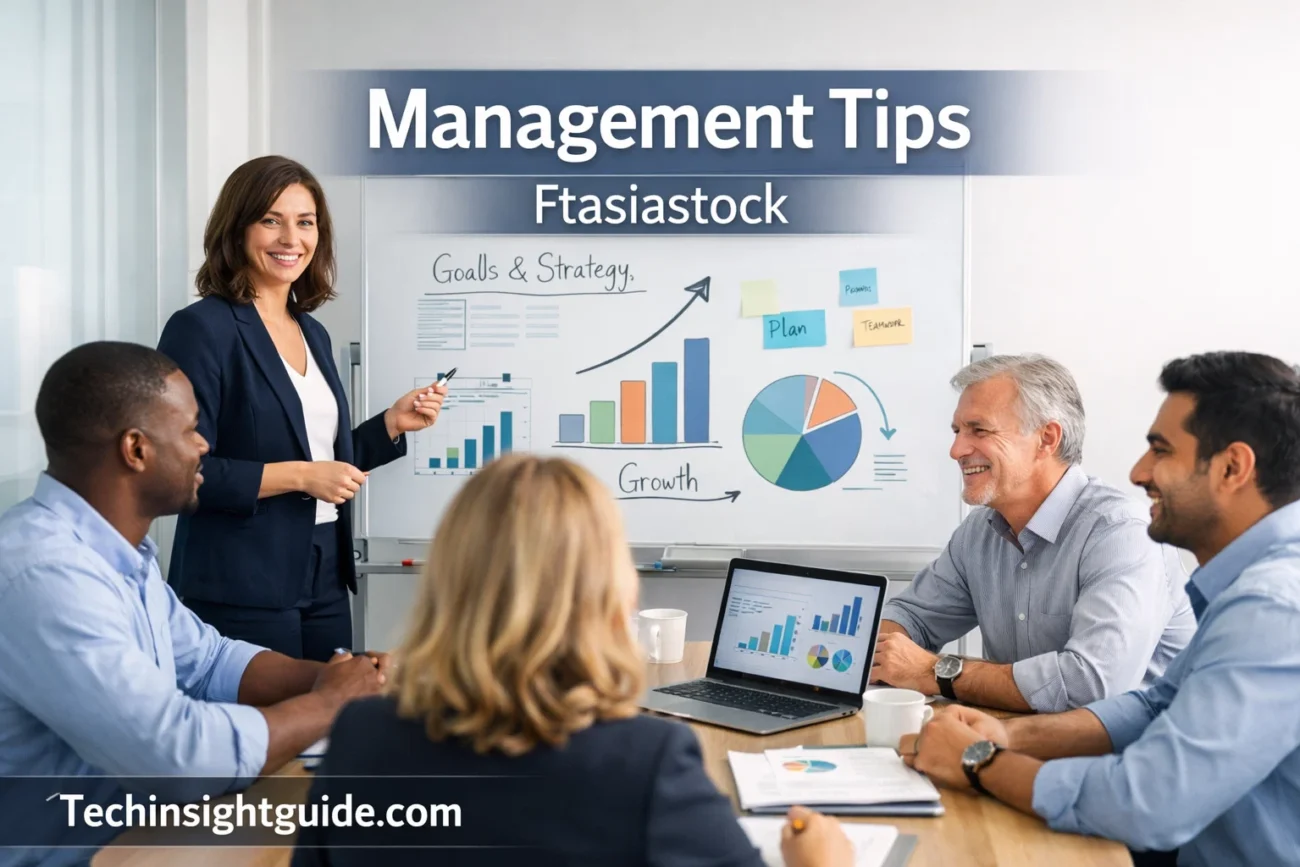
Effective management isn’t just about delegating tasks; it’s about creating an environment where teams thrive, goals are met, and results are consistently achieved. Management Tips Ftasiastock combines both timeless principles and modern strategies to provide a comprehensive framework for managers at all levels. In this guide, we’ll explore actionable tips for improving communication, time management, team culture, and much more. Whether you’re leading a team of five or managing a large organization, these tips will help you refine your leadership skills and bring out the best in your team.
What Effective Management Really Is
Management is more than simply organizing tasks and overseeing workflows. At its core, effective management revolves around guidance, support, and motivation. It is about creating a sense of direction and empowering others to follow it. Strong management skills are essential for ensuring that both employees and the business as a whole are aligned with a common vision.
One of the key elements of management is visionary leadership. This means setting clear goals and consistently communicating them to your team. As a manager, it’s important to demonstrate how each individual’s contributions tie into the broader mission of the organization. This gives employees a sense of purpose and fosters a shared commitment to success.
Moreover, management is about adaptability. The business world is dynamic, and leaders must be ready to adjust strategies, reallocate resources, and guide their teams through unforeseen challenges. Being a flexible manager ensures that your team can stay focused and continue delivering results, no matter the circumstances.
Clear Goal Setting for Success
Clear, measurable goals are the bedrock of any successful team. Setting goals allows managers to define expectations, guide performance, and monitor progress. Without clear objectives, employees may become disengaged, uncertain about their roles, and ultimately less productive. This is why SMART goals (Specific, Measurable, Achievable, Relevant, Time-bound) are such an essential tool for managers.
When setting goals, it’s vital to ensure that each goal aligns with both the company’s vision and individual employee strengths. This alignment not only keeps the team motivated but also fosters a sense of ownership over the outcomes. Managers should hold regular check-ins to assess progress and make adjustments to ensure that the team stays on track.
Lastly, goal setting should not be a one-time event. Instead, it should be an ongoing process of evaluation and refinement. As circumstances change, goals must be adjusted to reflect new realities, ensuring they remain relevant and achievable. Through this approach, managers can keep their teams focused and aligned with the company’s strategic priorities.
Communication — The Heart of Great Leadership
Effective communication is at the core of great leadership. A manager’s ability to communicate clearly and often can significantly impact team performance and morale. Without transparent communication, misunderstandings arise, tasks get delayed, and frustration mounts. Therefore, as a manager, it is essential to foster an environment where open dialogue is encouraged.
One effective communication strategy is active listening. This involves fully engaging with what others are saying, asking questions, and providing feedback. By practicing active listening, you show your team members that their ideas and concerns are heard and valued. It also creates an atmosphere where everyone feels comfortable sharing their perspectives, ultimately leading to better solutions and innovations.
Additionally, non-verbal communication plays a critical role in leadership. Body language, tone of voice, and facial expressions can convey just as much — if not more — than words. Managers who are mindful of their non-verbal cues can build rapport and trust with their teams, making them more approachable and effective leaders.
Time Management for Busy Teams
Time management is a crucial skill for managers to master. With the ever-increasing demands on managers and their teams, it’s easy for tasks to pile up, leaving little time for what truly matters. Prioritizing tasks effectively and managing the time spent on each task can help managers and their teams stay on track.
An effective strategy is the Eisenhower Matrix, which helps categorize tasks based on urgency and importance. By distinguishing between what’s critical, what can be delegated, and what should be eliminated, managers can ensure that time and resources are being used in the most efficient way possible. This framework allows for clearer decision-making and better time allocation.
Also, managers should lead by example in time management. By respecting others’ time, meeting deadlines, and adhering to schedules, managers set the tone for the rest of the team. Creating a structured workday that balances meetings, work, and breaks will keep the team motivated, energized, and productive throughout the day.
Technology and Smart Tools for Managers
In today’s fast-paced business environment, managers can’t afford to rely solely on traditional methods. Technology offers countless tools that can streamline processes, improve communication, and provide valuable insights into team performance. Whether it’s project management tools, communication platforms, or data analysis tools, technology is an indispensable asset for modern management.
Project management tools like Trello, Asana, or Monday.com help keep tasks organized, assign responsibilities, and track deadlines. These tools ensure that nothing slips through the cracks and that everyone is on the same page. Additionally, using cloud-based platforms ensures that team members, whether in the office or working remotely, have access to the information they need at all times.
Incorporating technology also makes it easier for managers to measure team performance and provide real-time feedback. Platforms like Google Analytics and other performance-tracking software can help managers identify where improvements are needed and adjust strategies accordingly. These tools not only enhance productivity but also empower managers to make data-driven decisions.
Motivation and Team Culture
A motivated team is a productive team. As a manager, creating a positive and inclusive team culture is one of the most important things you can do. When employees feel valued, appreciated, and included, they’re more likely to engage with their work and go above and beyond to achieve company goals.
Recognition is a powerful motivator. Regularly acknowledging team members’ contributions and celebrating achievements, both big and small, can significantly boost morale and reinforce positive behavior. This recognition doesn’t always have to be financial; it could be as simple as a heartfelt thank-you or public acknowledgment during a meeting.
Moreover, fostering a culture of trust and transparency helps employees feel confident and supported. When managers are honest, fair, and consistent, it creates a work environment where employees can perform without fear of favoritism or bias. Over time, a strong team culture becomes a self-sustaining force, with team members naturally helping each other and maintaining high standards.
Real-Life Examples and Case Stories
Sometimes, the best way to learn a management tip is by seeing how it plays out in real life. Take Apple, for example. Under the leadership of Steve Jobs, Apple emphasized clear goals, consistent communication, and a culture of innovation. This approach helped Apple revolutionize the technology industry and build one of the most valuable companies in the world. Jobs’ leadership style blended strategic vision with hands-on management and relentless focus on excellence.
Another great example is Netflix, where the company’s founders created a unique culture centered on freedom and responsibility. Managers trust their teams to make decisions and expect them to take risks and be accountable for results. This culture has allowed Netflix to thrive in the highly competitive streaming market, constantly evolving and maintaining its dominance.
These examples highlight how managers who focus on clear communication, strategic vision, and culture-building can drive exceptional results and inspire long-term success.
Common Mistakes to Avoid in Management
While management tips are crucial, avoiding mistakes is just as important. One of the biggest mistakes managers make is micromanaging. Micromanagement stifles creativity and reduces employee engagement. Instead of giving team members the space to problem-solve and make decisions, micromanagers hover and control every detail. This leads to frustration, burnout, and a lack of autonomy.
Another mistake is neglecting feedback. Managers must provide regular, constructive feedback to their teams. Without this, employees may feel unsupported or unsure about their performance. Feedback should be timely, specific, and aimed at fostering growth. It should highlight both strengths and areas for improvement.
Lastly, not investing in team development can hinder long-term growth. Failing to provide training opportunities or challenge team members can result in stagnation. Continuous learning is key to keeping employees engaged and improving performance.
How to Stay Adaptable and Flexible
In an ever-changing business landscape, managers must remain flexible and adaptable. Being adaptable means responding quickly to challenges, whether that’s a sudden change in market conditions, new technology, or shifting team dynamics. Managers who embrace change rather than fear it can guide their teams through transitions smoothly.
A good manager knows that not everything will go as planned. Sometimes, a strategy will need to be adjusted midway. Flexibility involves pivoting when necessary while staying aligned with broader goals. This kind of adaptability is crucial in fast-paced industries where agility is often the key to survival.
By promoting a growth mindset in your team, you can encourage an environment that embraces new ideas and continuous improvement. This not only helps the team stay competitive but also fosters a culture where learning and innovation thrive.
Continuous Learning and Growth
Lastly, great managers understand the importance of continuous learning and self-improvement. The best leaders are lifelong learners, always seeking new knowledge, strategies, and insights. Whether through formal education, self-study, or feedback from peers, continuous learning keeps a manager’s skills sharp and relevant.
Managers should encourage their teams to take part in training programs or workshops. This helps employees stay up-to-date with industry trends, improving both their skills and their job satisfaction. As a manager, you can also lead by example, sharing your own learning experiences and encouraging others to do the same.
By fostering a culture of continuous improvement, you create a team that is always evolving, adapting, and striving for excellence. This helps the team and the organization stay ahead of the curve and thrive in the face of challenges.
Read More: Geekzilla.Tech Honor Magic 5 Pro: A Comprehensive Review
Conclusion
Effective management is about more than just managing tasks—it’s about building a thriving, motivated, and engaged team. By implementing Management Tips Ftasiastock, leaders can improve communication, set clear goals, foster team culture, and drive success. The strategies shared in this guide are designed to make you a more effective and adaptable manager, capable of achieving both short-term results and long-term success.
So, as you move forward in your management journey, remember to stay focused, stay connected with your team, and always be open to learning and adapting. Your leadership will inspire your team to reach new heights.
